CVE-2025-15693: an Admin+ Path Traversal in the JCH Optimize WordPress plugin (4.2.1–5.0.0), reachable through the dir parameter of the filetree AJAX action. Details, timeline, PoC and remediation.
CVE-2025-15694 – Joli Table Of Contents – Stored XSS – PoC
CVE-2025-15663 – Ultimate Before After Image Slider & Gallery (BEAF) – Author+ Stored XSS via After Label – PoC
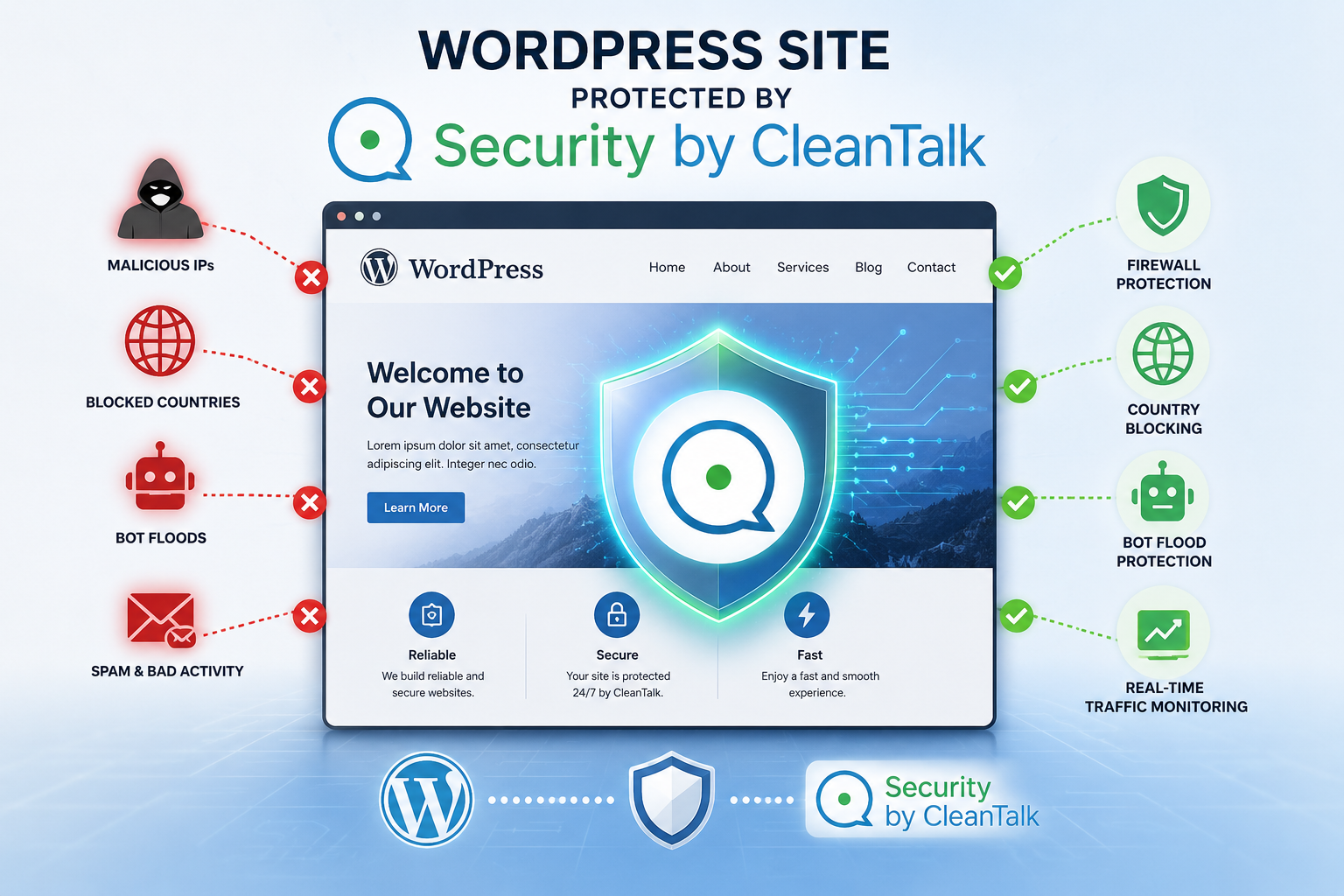
WordPress Firewall Plugin: How to Block IPs, Countries and Bot Floods with Security by CleanTalk
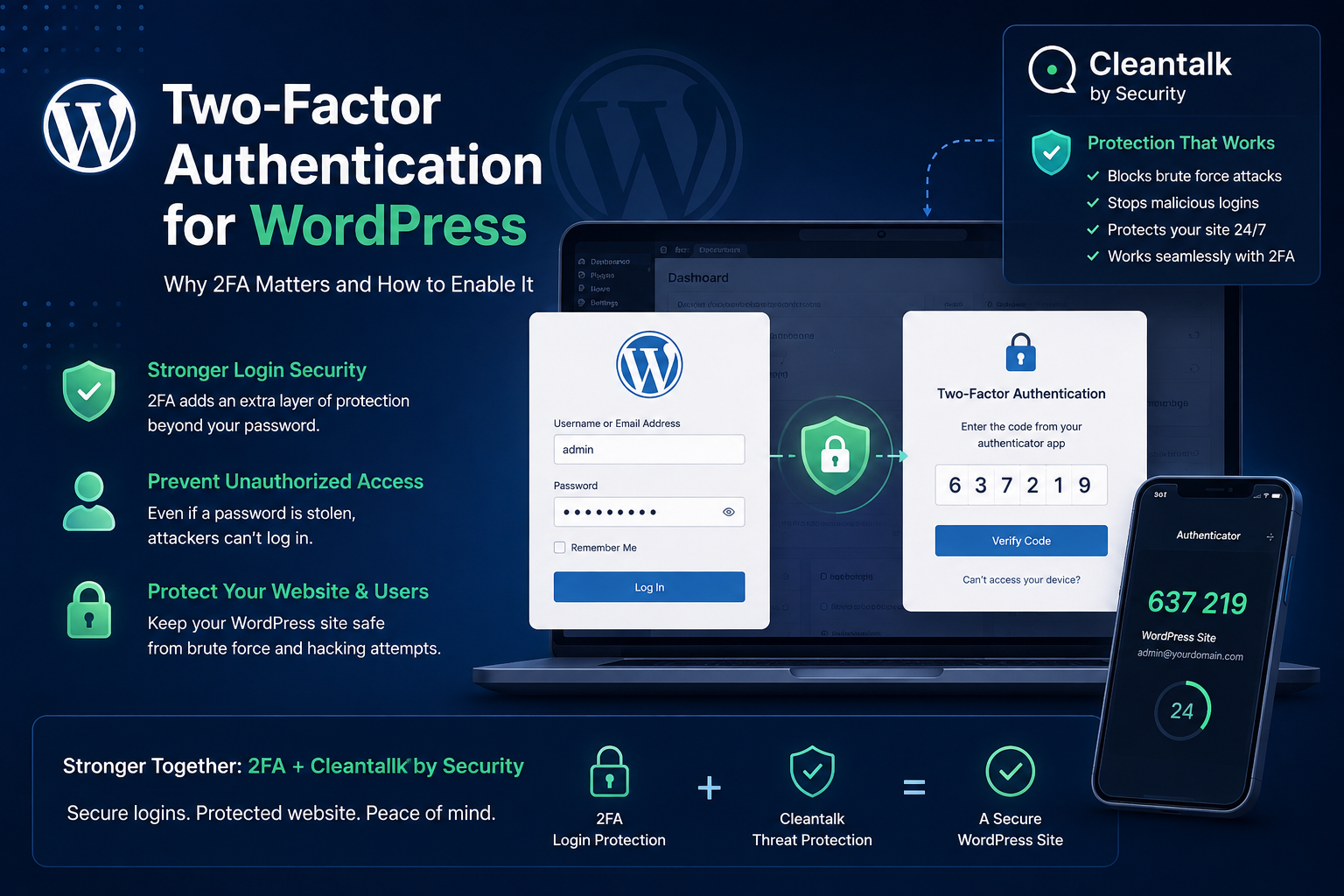
Two-Factor Authentication for WordPress: Why 2FA Matters and How to Enable It
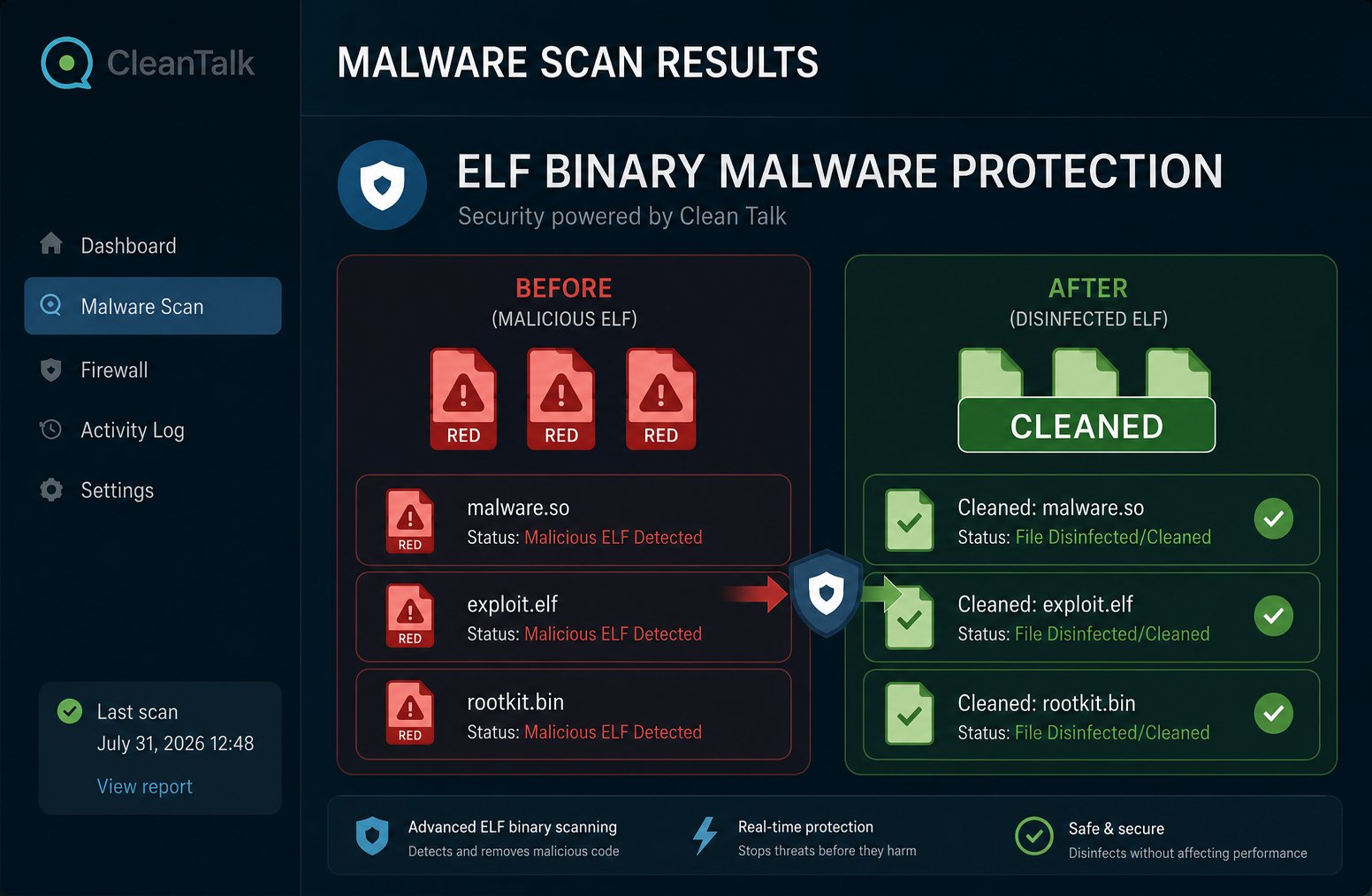
How to Find and Remove Malicious ELF Files on Your Website: CleanTalk’s BinaryCheck Module

Most WordPress security scanners are good at catching malicious PHP code — web shells, injected theme and plugin files, suspicious eval() calls. But attackers have another tool in their arsenal: compiled binary files in ELF format (Executable and Linkable Format) — the standard executable format for Linux. Such a file contains no readable PHP code, doesn’t match familiar signatures found in plugin source files, and often has no file extension at all — so classic file scanners simply skip right past it.
This is exactly the gap that Security by CleanTalk’s new module — BinaryCheck — was built to close.
CVE-2025-15677 – GeoDirectory < 2.8.110 – Editor+ Stored XSS – POC

WordPress plugins that provide business directory functionality often allow administrators and editors to customize categories, icons, images, and other visual elements. While these features improve usability, they also increase the attack surface if user-controlled input is not properly validated before being stored and rendered.
During security testing of the GeoDirectory plugin, a Stored Cross-Site Scripting (Stored XSS) vulnerability was discovered affecting versions prior to 2.8.110. The vulnerability allows an authenticated Editor (or higher) to inject malicious JavaScript into the Map Icon parameter of a Place Category. The payload is permanently stored and later executed whenever the vulnerable page is viewed by another privileged user.
Because the malicious payload is stored inside the WordPress database, every administrator who accesses the affected interface can unknowingly execute attacker-controlled JavaScript, potentially resulting in complete administrative account compromise.
CVE-2025-15675 – Charitable < 1.8.5.3 – Admin+ Stored XSS – POC

Charitable is a widely used WordPress donation and fundraising plugin that enables organizations to create fundraising campaigns, donation forms, recurring payment options, and crowdfunding initiatives. With its drag-and-drop campaign builder and customizable templates, it is trusted by thousands of nonprofits and charities to manage online donations.
During security testing, a Stored Cross-Site Scripting (XSS) vulnerability was identified in versions prior to 1.8.5.3. The vulnerability exists in the campaign builder, where the ALT Text field for campaign images fails to properly sanitize user input before storing and rendering it. As a result, an authenticated administrator can inject malicious JavaScript that is permanently stored and executed whenever the vulnerable content is rendered.
Security Update for CleanTalk Anti-Spam Module for 1C-Bitrix
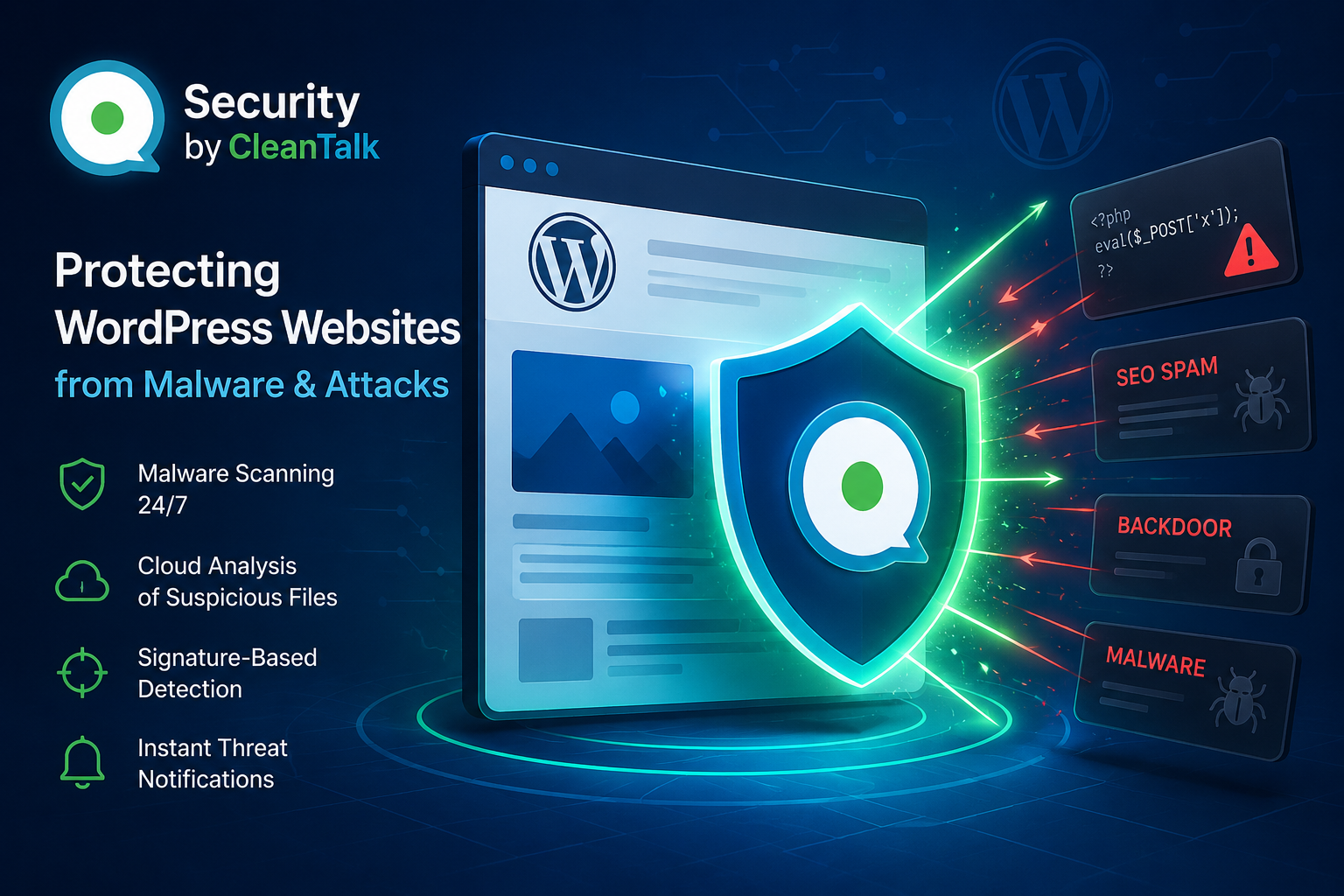
How Security by CleanTalk Protects WordPress Websites with Signature Analysis and Cloud Malware Detection

Every day, thousands of WordPress websites become targets for cybercriminals. Vulnerable plugins, outdated themes, weak passwords, and newly discovered security flaws allow attackers to upload malicious code, web shells, SEO spam, backdoors, and other dangerous files.
In many cases, website owners are completely unaware that their site has been compromised. Malware can remain active for weeks or even months while secretly redirecting visitors, sending spam, creating hidden administrator accounts, or providing attackers with full control over the server.