CVE-2025-15703: an Admin+ Stored XSS in the WP Job Openings WordPress plugin (below 4.0.0), triggered through the Icon field of a job specification. Details, timeline, PoC and remediation.
CVE-2025-15703 – WP Job Openings – Admin+ Stored XSS – POC
CVE-2025-15703: an Admin+ Stored XSS in the WP Job Openings WordPress plugin (below 4.0.0), triggered through the Icon field of a job specification. Details, timeline, PoC and remediation.
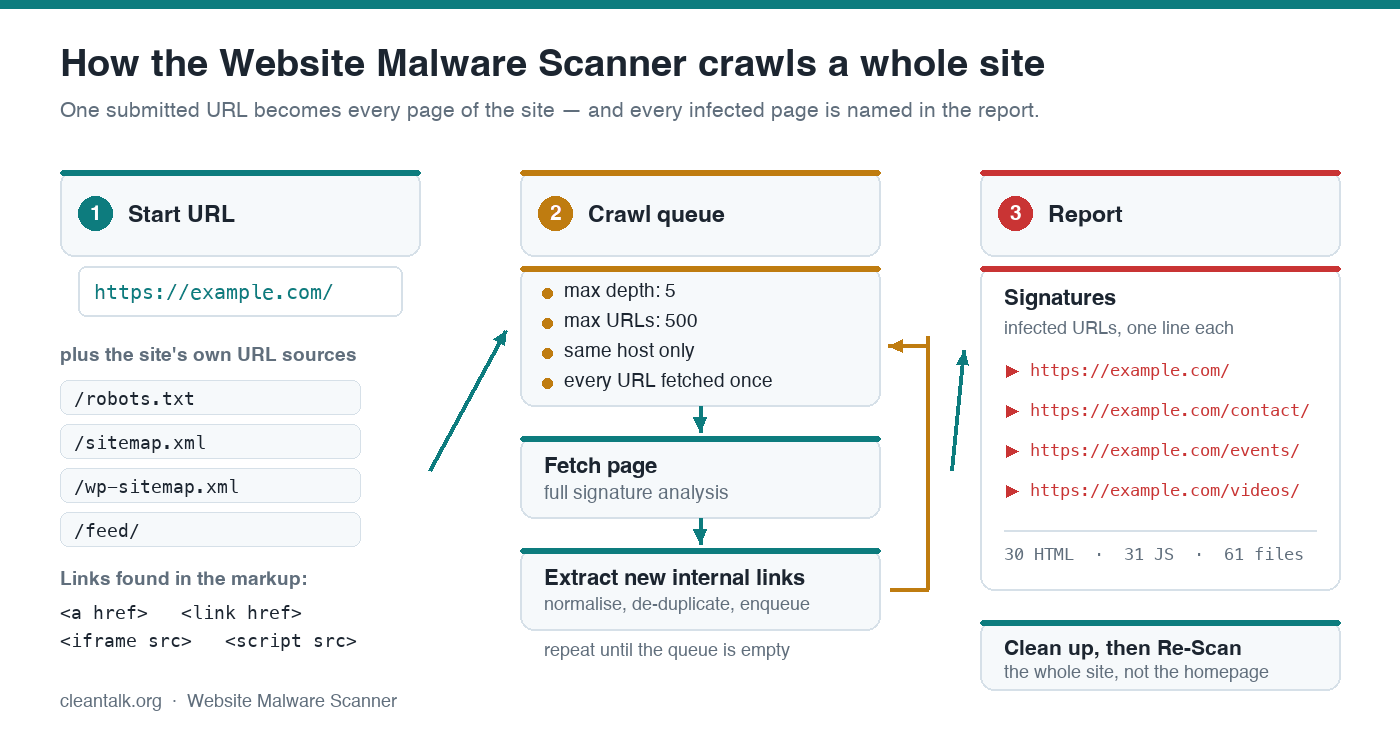
Malware often hides on inner pages while the homepage looks clean. The CleanTalk Website Malware Scanner now crawls the whole site – links, sitemaps, robots.txt and feeds – and lists every infected URL under Signatures.
CVE-2026-104119: an Admin+ Stored XSS in the Simple Shopping Cart WordPress plugin (below 5.2.6), triggered through the PayPal API credentials settings. Details, timeline, impact on Multisite and remediation.
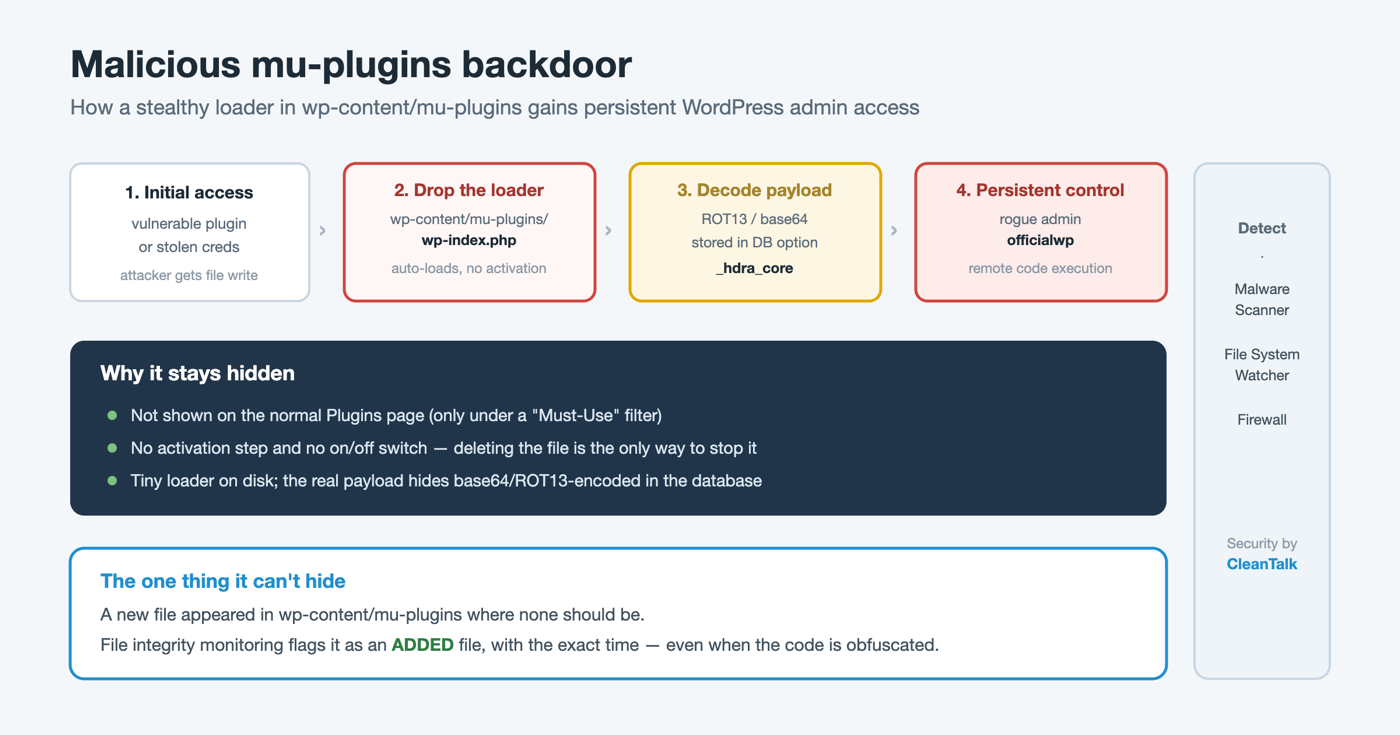
How the WordPress mu-plugins backdoor works: a hidden loader in wp-content/mu-plugins that auto-runs, stashes its payload in the database, and creates a rogue admin — plus indicators of compromise, detection and removal.
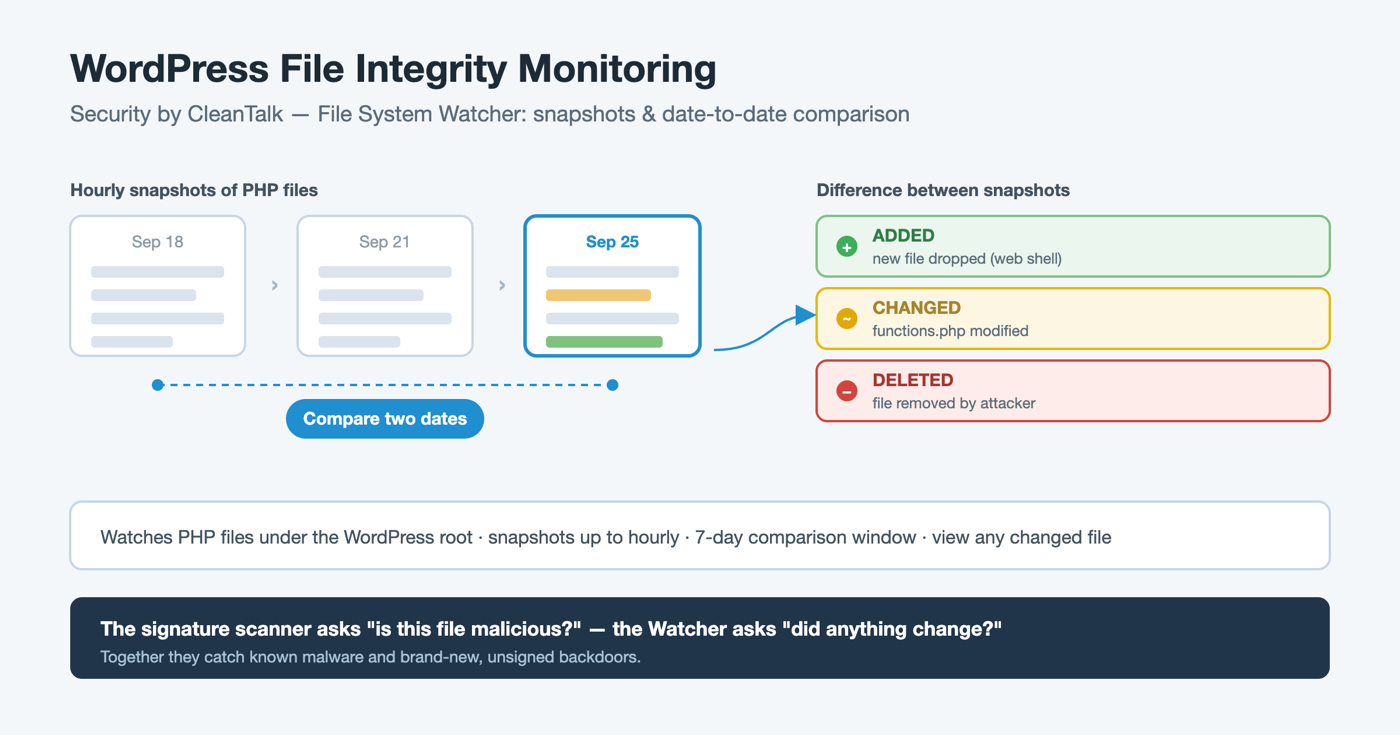
How the File System Watcher in Security by CleanTalk detects added, changed and deleted files on WordPress: hourly snapshots, date-to-date comparison, step-by-step setup, alternatives and FAQ.
Media player plugins embed and stream video and audio, render player markup on the front end, store per-media settings, and expose REST and AJAX endpoints for playback data and analytics. Presto Player version 4.5.1 has successfully completed the CleanTalk Plugin Security Certification process and received PSC-2026-65705, confirming that the review focused on media block rendering and output escaping, REST and AJAX endpoint authorization, settings storage, and handling of external video sources and uploaded media.
Product comparison plugins add and remove items through AJAX, store the visitor’s comparison list, and render a table of product attributes on the front end. YITH WooCommerce Compare version 3.14.0 has successfully completed the CleanTalk Plugin Security Certification process and received PSC-2026-65706, confirming that the review focused on the AJAX add/remove endpoints, product ID handling, output escaping in the comparison table, and sanitization of the plugin’s settings.
HTTPS redirection plugins intercept incoming requests, decide the target scheme, and issue redirects while reading proxy and forwarded headers. Easy HTTPS Redirection (SSL) version 2.0.1 has successfully completed the CleanTalk Plugin Security Certification process and received PSC-2026-65704, confirming that the review focused on redirect target handling, settings storage, capability and nonce checks, and safe processing of proxy and forwarded headers.
Two-factor authentication plugins handle login flows, generate and store shared secrets, issue one-time and backup codes, and enforce access policies across user roles. WP 2FA version 4.1.0 has successfully completed the CleanTalk Plugin Security Certification process and received PSC-2026-65703, confirming that the review focused on the 2FA setup wizard, TOTP secret handling, one-time and backup code validation, capability and nonce checks on settings, and role-based enforcement.
Custom fields frameworks render administrator-defined fields on post, term, user, and settings screens, store arbitrary meta, and expose AJAX endpoints for selecting posts, users, and terms, uploading and deleting files, and fetching oEmbeds. Meta Box – A Framework for Dynamic Websites version 5.15.1 has successfully completed the CleanTalk Plugin Security Certification process and received PSC-2026-65699. The review focused on AJAX authorization and nonces, the file upload and delete flow, object-selection endpoints, meta storage and output escaping, and the [rwmb_meta] shortcode.