WP2Shell is an actively exploited WordPress core RCE chain. See affected versions, code-level CVE analysis, IOCs, fixes, and CleanTalk protection.
WP2Shell WordPress RCE Explained: CVE-2026-63030 and CVE-2026-60137
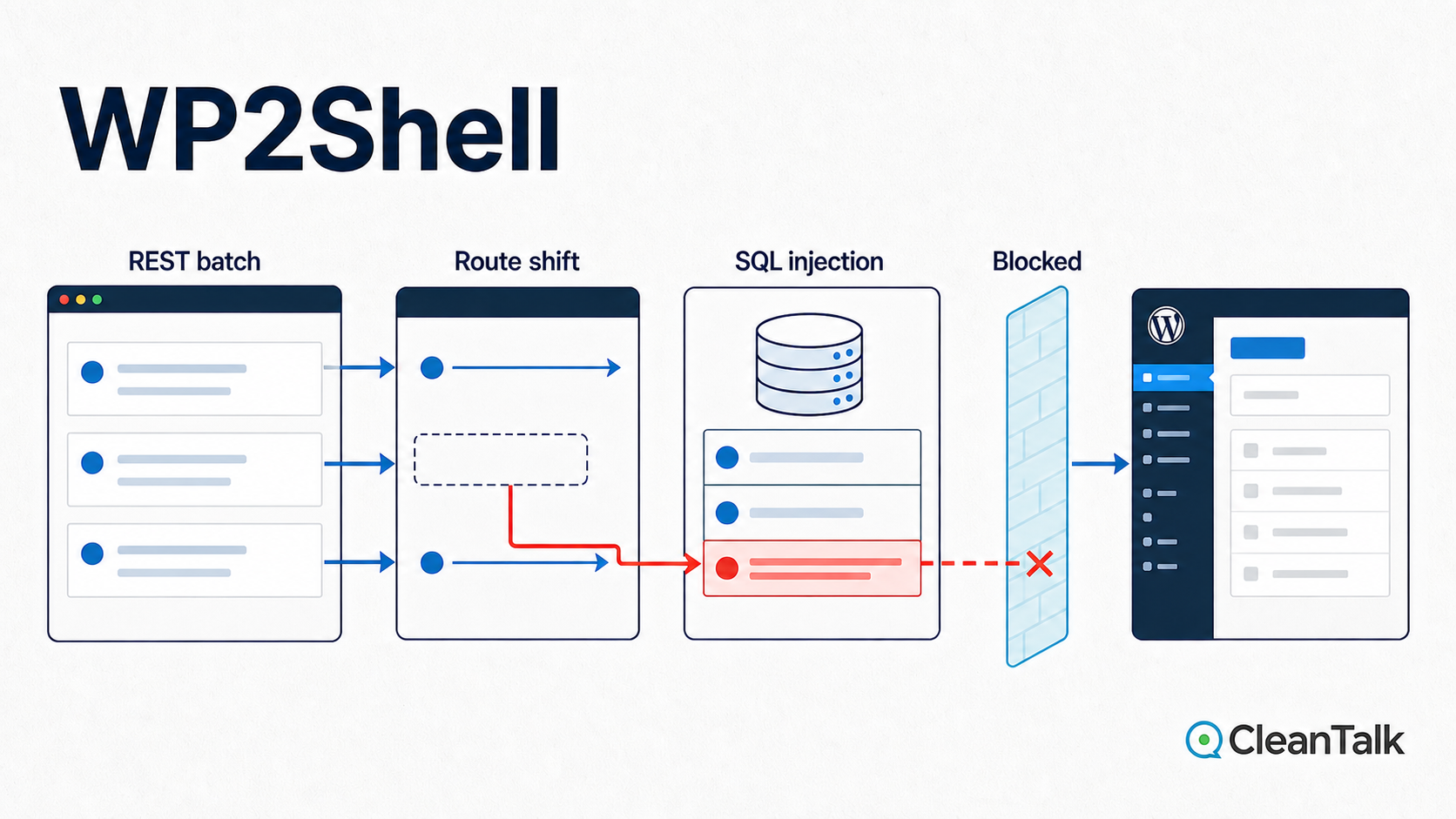
WP2Shell is an actively exploited WordPress core RCE chain. See affected versions, code-level CVE analysis, IOCs, fixes, and CleanTalk protection.
Contact Form 7 extensions can influence spam checks, stored submissions, redirects, and outbound webhooks. These features cross the boundary between anonymous form input, privileged records, external destinations, and front-end responses. CF7 Apps – Honeypot, Database, Redirection, Webhook, and Addons for Contact Form 7 version 3.6.1 has successfully completed the CleanTalk Plugin Security Certification process and received PSC-2026-64684, confirming that the plugin was reviewed from a secure code perspective with attention to public submissions, anti-spam checks, stored records, redirect targets, webhook configuration, and administrator access.
Content ordering plugins turn drag-and-drop administrator actions into persistent changes across posts, pages, taxonomies, and sites. Those updates must be limited to authorized objects and protected from forged requests. Intuitive Custom Post Order version 3.2.0 has successfully completed the CleanTalk Plugin Security Certification process and received PSC-2026-64683, confirming that the plugin was reviewed from a secure code perspective with attention to reorder permissions, request integrity, object identifiers, taxonomy operations, multisite scope, and stored ordering data.
Template import tools bring structured design data and assets into a WordPress installation. Import permissions, file validation, remote resources, and the safety of stored page content all matter before an imported kit reaches the public site. Template Kit – Import version 1.0.16 has successfully completed the CleanTalk Plugin Security Certification process and received PSC-2026-64682, confirming that the plugin was reviewed from a secure code perspective with attention to import authorization, package validation, template data, remote assets, stored content, and post-import rendering.
Cookie consent plugins render banners to every visitor and store configuration that controls scripts and consent choices. Safe public output and protected administrator settings are important for both reliability and privacy workflows. CookieAdmin – Cookie Consent Banner version 1.2.2 has successfully completed the CleanTalk Plugin Security Certification process and received PSC-2026-64681, confirming that the plugin was reviewed from a secure code perspective with attention to banner configuration, consent state handling, script controls, administrator permissions, and front-end rendering.
Commerce APIs expose structured access to products, orders, customers, and store operations. A compatibility plugin that restores legacy endpoints must enforce authentication and permissions consistently across every request. WooCommerce Legacy REST API version 1.0.5 has successfully completed the CleanTalk Plugin Security Certification process and received PSC-2026-64680, confirming that the plugin was reviewed from a secure code perspective with attention to API authentication, request authorization, object access, input parsing, response data, and legacy endpoint behavior.
Multilingual plugins store translated text and insert it into front-end output across themes and other plugins. Visual editing, language routing, and automatic translation features require firm access controls and consistent escaping. TranslatePress – Translate Multilingual sites with AI Translation version 3.2.6 has successfully completed the CleanTalk Plugin Security Certification process and received PSC-2026-64679, confirming that the plugin was reviewed from a secure code perspective with attention to translation storage, visual editor permissions, multilingual routing, automatic translation settings, and public output.
Form builders accept untrusted input from public visitors and turn it into stored records, notifications, and administrator workflows. Secure validation, permission checks, and careful output handling are central to every submission path. Ninja Forms – The Contact Form Builder That Grows With You version 3.14.11 has successfully completed the CleanTalk Plugin Security Certification process and received PSC-2026-64678, confirming that the plugin was reviewed from a secure code perspective with attention to public submissions, field validation, stored form settings, administrator actions, notifications, and data exposure.
Elementor extension packs add widgets, templates, display rules, and dynamic output to the page builder. Because saved widget settings become public HTML, secure rendering and protected editor actions are essential. Premium Addons for Elementor – Powerful Elementor Templates & Widgets version 4.11.89 has successfully completed the CleanTalk Plugin Security Certification process and received PSC-2026-64677, confirming that the plugin was reviewed from a secure code perspective with attention to widget configuration, template operations, dynamic rendering, editor requests, and stored front-end output.
Image optimization plugins process files that become part of nearly every public page. Compression, format conversion, lazy loading, and CDN delivery all need careful handling of uploads, metadata, and generated URLs. Smush – Image Optimization, Compression, Lazy Load, WebP & CDN version 4.2.0 has successfully completed the CleanTalk Plugin Security Certification process and received PSC-2026-64676, confirming that the plugin was reviewed from a secure code perspective with attention to image processing inputs, media permissions, generated formats, remote delivery settings, and public markup.